
You Don't Have to Live at the Beach to Live the Florida Summer
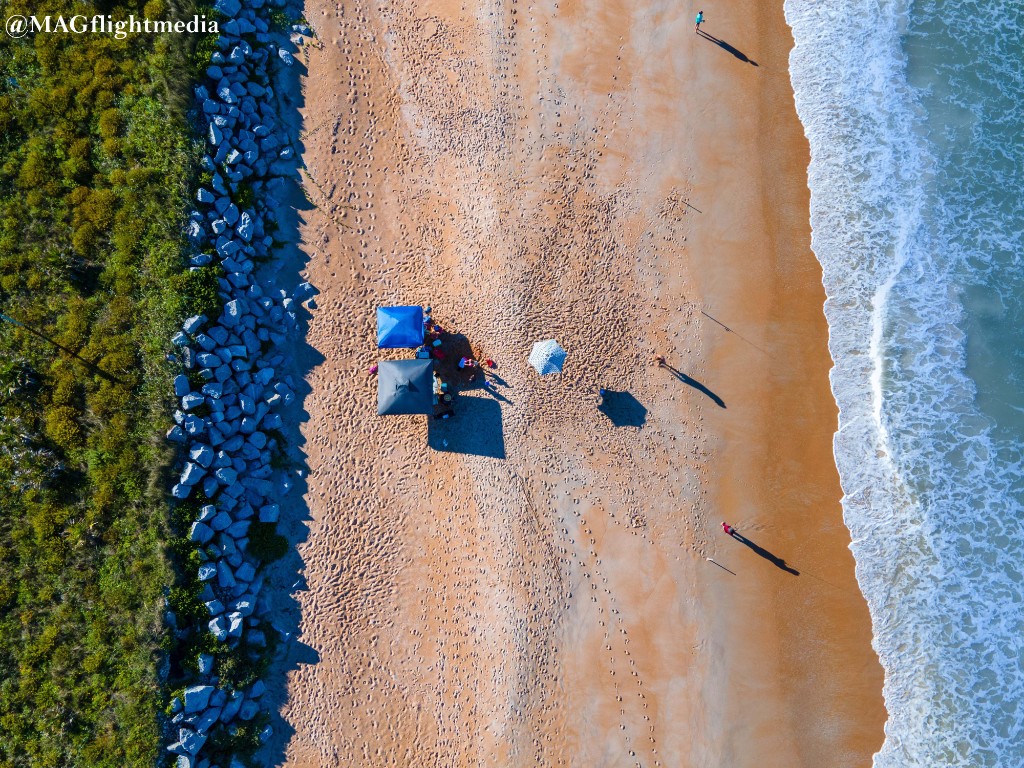
Flagler Beach, about two hours east of Central Florida. Photo credit: Mag Flight Media.
Ask someone who’s never lived in Florida what they picture, and they’ll usually describe sand between their toes and a house within walking distance of the water. Ask someone who actually lives in Orange or Lake County, and you’ll get a different answer.
Most of us aren’t beach people by address. We’re beach people by weekend.
The Two-Hour Rule
Here’s something that surprises a lot of newcomers: Florida is narrow enough that from most of Central Florida, you’re never more than about two hours from saltwater in one direction or the other. Head east toward New Smyrna or Flagler Beach and you’re watching surfers by mid-morning. Head west toward Clearwater or St. Pete and you’re doing the same thing on the Gulf side by lunch.
You don’t get the ocean breeze every evening. But you also don’t need a flight, a rental car, and a week off work to have a beach day. You need a full tank of gas and a Saturday.
That’s the trade a lot of families in Lake and Orange County have quietly made, whether they thought about it in those terms or not. Load the cooler, get out the door before 8, and you’re back home in the middle of the state before the kids are cranky for bed.
What This Actually Looks Like Day to Day
It rarely looks like a big vacation. It looks like a family in Clermont deciding Sunday morning that they’re driving to Flagler for a few hours instead of going to the community pool. It looks like a couple in Winter Garden splitting the difference and doing a Tampa staycation for a night, dinner on the water, a hotel with a pool for the kids, home again by early afternoon the next day.
Neither of those trips requires living on the coast. They just require living somewhere central enough that the coast, either coast, is a manageable drive rather than a plane ticket.
That’s part of what makes Central Florida a strange and useful place to plant roots. You’re not choosing between the beach and everything else. You’re choosing a home base that keeps both coasts, plus theme parks, springs, and everything in between, within range of a normal weekend.
The Honest Trade-Offs
It’s worth being straight about what you don’t get living inland.
You don’t get the daily ocean air, the walk-to-the-water lifestyle, or the ability to watch a sunrise over the Atlantic before work. Coastal towns have their own rhythm, and it’s a real thing people move for.
What you often get instead, living in Lake or Orange County, is more house for the money, generally lower homeowners insurance than you’ll find directly on the coast, and less exposure to the flooding and storm surge risk that comes with living right on the water during hurricane season. You also tend to get less tourist traffic in your own neighborhood, since you’re not living in a place other people are visiting.
Neither of those is automatically the “right” choice. It depends on what a family actually wants day to day versus a few times a summer.
The Mortgage Mike Perspective
This is one of those questions that comes up more than people expect when they’re deciding where to buy: coastal or inland?
A few things worth knowing before you decide:
Flood insurance is not optional in most coastal zones, and it’s not small. If a property sits in a FEMA-designated flood zone, your lender will require flood insurance in addition to standard homeowners insurance, and that cost can run well into the thousands per year depending on the property. Homes further inland, including most of Lake and Orange County, are far less likely to require it at all.
Homeowners insurance overall tends to run lower away from the coast. Wind and storm surge risk are a big part of what insurers price in, and that risk drops the further you get from the water.
Appreciation isn’t guaranteed in either direction. Coastal property sometimes appreciates faster because supply is limited, but it’s also more exposed to insurance cost increases that can eat into what a buyer can actually afford. Inland markets in growing counties like Lake and Orange have their own appreciation story, driven more by population growth and new development than by proximity to water.
If you’re weighing coastal versus inland, the right questions to ask a lender or an insurance agent are specific ones: What is the flood zone designation for this exact property? What would flood and windstorm coverage actually cost here, not just the estimate? How has insurance pricing in this specific area changed in the last few years?
Those answers matter more to your monthly payment than almost anything else about the house itself.
What It’s Really Like
Living in the middle of the state means the beach is a plan, not a given. For a lot of families, that turns out to be a fine trade. The Saturday drive becomes its own kind of tradition: the same gas station stop, the same radio station on I-4 or the Turnpike, the same feeling of the air changing as you get close to the water.
You don’t have to live at the beach to love it. You just have to know it’s there, and be willing to drive.